


|
home ao english musik literatur journalismus bilder sprachen mehr shop sitemap | |
Im Iran  |
In Iran |
En Iran |
In Iran |
En Irán |
(Deutsch) Dies ist die linguistische Version der siebzehnten Staffel der Jungs. Die Texte sind dieselben wie auf der Hauptseite. |
(English) This is the linguistic version of the seventeenth season of the Boys. The texts are the same as on the main page. |
(Français) Voici la version linguistique de la dix-septième saison des Gars. Les textes sont les mêmes que sur la page principale. |
(Italiano) Questa è la versione linguistica della diciassettesima stagione dei Ragazzi. I testi sono gli stessi della pagina principale. Colori: parole singole (verde) frasi nominali (azzurro) frasi verbali (ocra) modi di dire + collocazioni (rosso) parolacce + onomatopea + giochi di parole + citazioni (viola) |
(Español) Esta es la versión lingüística de la decimoséptima temporada de los Chicos. Los textos son los mismos que en la página principal. |
(English) A new day, a new awakening. Heinz takes a deep breath and is happy. As for Helmut … Well, he still has to get used to his new surroundings. Let’s give him a little time, he’s had a few really difficult days behind him. |
 |
(Italiano) Un nuovo giorno, un nuovo risveglio. Heinz fa un respiro profondo ed è felice. Quanto a Helmut … Beh, deve prima abituarsi al nuovo ambiente. Diamogli un po’ di tempo, ha passato dei giorni davvero difficili. |
(Deutsch) Ein neuer Tag, ein neues Erwachen. Heinz atmet tief durch und ist glücklich. Was Helmut angeht … Nun ja, er muss sich erst an die neue Umgebung gewöhnen. Geben wir ihm ein bisschen Zeit, er hat ein paar wirklich schwierige Tage hinter sich. Normal Version | ||
Tag 1 1 Heinz: Sobh be-cheer! |
Day 1 Heinz: Sobh be-khair! |
Jour 1 Heinz : Sobh be-khair ! |
Giorno 1 Heinz: Sobh be-kheer! |
Día 1 Heinz: ¡Sobh be-kheer! |
2 Heinz: Willkommen in Teheran! Das geht hier vor. |
Heinz: Welcome to Tehran! That's what's going on. |
Heinz : Bienvenue à Téhéran ! Voilà ce qui se passe. |
Heinz: Benvenuto a Teheran! Questo è che succede qui. |
Heinz: ¡Bienvenido a Teherán! Eso es lo que está pasando. |
3 Helmut: Oh mein Gott, du hast recht! Wir sind im Iran! |
Helmut: Oh my God, you're right! We're in Iran! |
Helmut : Oh mon Dieu, tu as raison ! On est en Iran ! |
Helmut: Oh mio Dio, hai ragione! Siamo in Iran! |
Helmut: ¡Oh, Dios mío, tienes razón! ¡Estamos en Irán! |
4 Helmut: Was hast du dir bloß dabei gedacht, mich gegen meinen Willen in ein Land zu bringen, das seit Monaten Krieg führt?! |
Helmut: What the hell were you thinking, bringing me against my will to a country that's been at war for months?! |
Helmut : Mais qu'est-ce qui t'a pris de m'emmener contre mon gré dans un pays en guerre depuis des mois ?! |
Helmut: Ma che ti è saltato in mente di portarmi contro la mia volontà in un paese che è in guerra da mesi?! |
Helmut: ¿¡En qué demonios estabas pensando al traerme contra mi voluntad a un país que lleva meses en guerra?! |
(English) Helmut refuses for a long time to leave the apartment. When Heinz finally manages to persuade him and the two of them visit the city’s landmark, the Freedom Tower, Heinz notices a new side of his friend and isn’t quite sure what to make of it. |
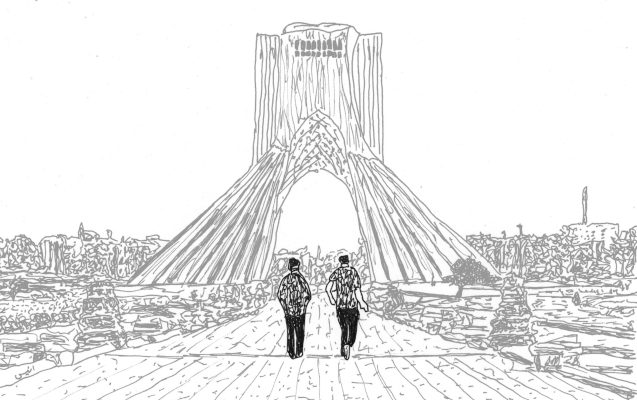 |
(Italiano) Helmut si rifiuta a lungo di uscire dall’appartamento. Quando Heinz riesce finalmente a convincerlo e i due vanno a visitare il simbolo della città, la Torre della Libertà, Heinz scopre un nuovo lato del suo amico e non sa bene cosa pensarne. |
(Deutsch) Lange weigert sich Helmut, die Wohnung zu verlassen. Als Heinz ihn schließlich überreden kann und die beiden das Wahrzeichen der Stadt besuchen, den Freiheitsturm, bemerkt Heinz eine neue Seite an seinem Freund und weiß nicht recht, was er davon halten soll. Normal Version | ||
ersten Schritte Tag 4 1 Heinz: Helmut, wir sind jetzt schon drei Tage hier und du ... |
First Steps Day 4 Heinz: Helmut, we've been here for three days now and you… |
Les Premiers pas Jour 4 Heinz : Helmut, ça fait déjà trois jours qu'on est ici et tu… |
I Primi passi Giorno 4 Heinz: Helmut, siamo qui già da tre giorni e tu… |
Primeros pasos Día 4 Heinz: Helmut, llevamos ya tres días aquí y tú… |
2 Helmut: Der Schritt verrät, ob einer schon auf seiner Bahn schreitet: so seht mich gehn! |
Helmut: The step reveals whether a man is already walking on his path: so watch me walk! |
Helmut : C'est à la démarche qu'on voit si quelqu'un est déjà sur sa voie : regardez-moi marcher ! |
Helmut: Il passo rivela se uno è già sulla propria via: così vedetemi andare! |
Helmut: El paso revela si uno ya marcha por su camino: ¡así, vedme andar! |
3 Helmut: (…) Ich fass es nicht. Die U-Bahn hat überhaupt nichts gekostet! Also das nenn ich Service. Kuck, Heinz, da ist schon wieder eine unverschleierte Frau. Aber wie ...? Ey, man sieht mehr Kopftücher in Berlin-Neukölln als hier! |
Helmut: (…) I don't believe it. The subway didn't cost anything at all! Now that's what I call service. Look, Heinz, there's another unveiled woman. But how…? Hey, you see more headscarves in Berlin-Neukölln than here! |
Helmut : (…) J'en reviens pas. Le métro ne coûtait rien du tout! Ça, c'est ce que j'appelle du service. Regarde, Heinz, encore une femme sans voile. Mais comment… ? Hé, on voit plus de foulards à Berlin-Neukölln qu'ici ! |
Helmut: (…) Non ci posso credere. La metropolitana non è costata proprio niente! Questo sì che lo chiamo servizio. Guarda, Heinz, c'è di nuovo una donna senza velo. Ma come…? Ehi, si vedono più foulard a Berlino-Neukölln che qui! |
Helmut: (…) No me lo puedo creer. ¡El metro no ha costado absolutamente nada! Esto sí que es servicio. Mira, Heinz, ahí hay otra mujer sin velo. Pero ¿cómo…? ¡Eh, se ven más pañuelos en la cabeza en Berlín-Neukölln que aquí! |
4 Helmut: Wieso, gibt es hier irgendwo tanzende Sterne? Vielleicht im Turm? |
Helmut: Why, are there dancing stars somewhere around here? Maybe in the tower? |
Helmut : Pourquoi, y a-t-il des étoiles dansantes par ici ? Peut-être dans la tour ? |
Helmut: Perché, ci sono stelle danzanti da qualche parte qui? Magari nella torre? |
Helmut: ¿Por qué? ¿Hay estrellas danzantes por aquí? ¿Quizá en la torre? |
(English) When they return from the Freedom Tower, Helmut is surprised to find the apartment door open and lots of food in the hallway. There are also boxes and sacks piled up in the living room, but that doesn’t stop the Boys from holding a briefing. |
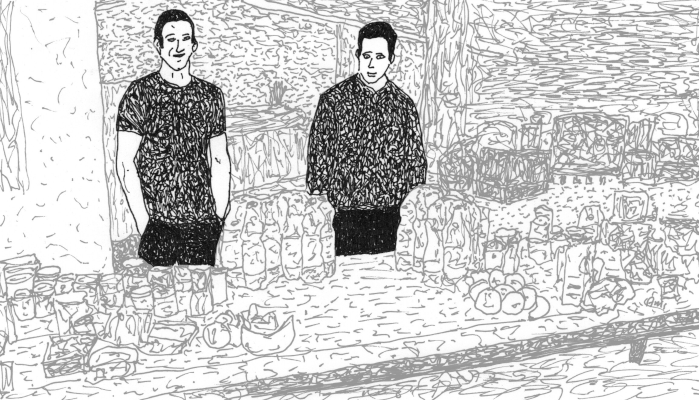 |
(Italiano) Quando tornano dalla Torre della Libertà, Helmut si meraviglia di trovare la porta dell’appartamento aperta e un sacco di generi alimentari nel corridoio. Anche in soggiorno si ammassano scatoloni e sacchi, ma questo non impedisce ai Ragazzi di fare il punto della situazione. |
(Deutsch) Als sie vom Freiheitsturm zurückkommen, wundert sich Helmut über die offene Wohnungstür und die vielen Lebensmittel im Flur. Auch im Wohnzimmer stapeln sich Kisten und Säcke, was die Jungs aber nicht davon abhält, eine Lagebesprechung abzuhalten. Normal Version | ||
Tag 4 1 Helmut: Salaam Azad und Ghada! Wir sind wieder daahaaa! Nanu, was ist denn hier los? Die Tür steht offen und jemand hat im Flur eine Art Warenlager eingerichtet. |
Day 4 Helmut: Salaam Azad and Ghada! We're baaaack! Huh, what's going on here? The door's wide open, and someone's set up some kind of warehouse in the hallway. |
Jour 4 Helmut : Salaam Azad et Ghada ! On est de retouuuuur! Tiens, qu'est-ce qui se passe ici ? La porte est grande ouverte et quelqu'un a installé une sorte d'entrepôt dans le couloir. |
Giorno 4 Helmut: Salaam Azad e Ghada! Siamo tornaaati! To', che succede qui? La porta è aperta e qualcuno ha allestito una specie di magazzino nel corridoio. |
Día 4 Helmut: ¡Salaam, Azad y Ghada! ¡Ya estamos de vueeeelta! Vaya, ¿qué pasa aquí? La puerta está abierta y alguien ha montado una especie de almacén en el pasillo. |
2 Heinz: Jetzt erzähl noch mal von Anfang an! Wie bist du auf den eigentümlichen Gedanken gekommen, ein Buch zu lesen? |
Heinz: Now tell me again from the beginning! How did you come up with the peculiar idea of reading a book? |
Heinz : Alors, raconte-moi encore une fois depuis le début ! Comment t'est venue cette idée bizarre de lire un livre ? |
Heinz: Adesso raccontami di nuovo tutto dall'inizio! Come ti è venuta in mente la strana idea di leggere un libro? |
Heinz: ¡Ahora cuéntamelo otra vez desde el principio! ¿Cómo se te ocurrió la peculiar idea de leer un libro? |
3 Heinz: Ja und nein. Wir sind erst mal aus dem Schneider und unsere Frauen auch, aber nichts garantiert uns, dass das so bleibt. Das Chamäleon arbeitet mit Gewalt und Einschüchterung. So jemandem ist nicht zu trauen. Wir müssen ihn enttarnen. |
Heinz: Yes and no. For now, we're in the clear, and so are our girlfriends, but nothing guarantees that it'll stay that way. The Chameleon uses violence and intimidation. You can't trust someone like that. We have to expose him. |
Heinz : Oui et non. Pour l'instant, on est tirés d'affaire, et nos femmes aussi, mais rien ne nous garantit que ça va durer. Le Caméléon recourt à la violence et à l'intimidation. On ne peut pas faire confiance à quelqu'un comme ça. Il faut le démasquer. |
Heinz: Sì e no. Per il momento siamo fuori dai guai, e anche le nostre ragazze, ma niente ci garantisce che rimarrà così. Il Camaleonte lavora con la violenza e l'intimidazione. Di uno così non ci si può fidare. Dobbiamo smascherarlo. |
Heinz: Sí y no. De momento estamos a salvo, y nuestras chicas también, pero nada nos garantiza que vaya a seguir así. El Camaleón recurre a la violencia y a la intimidación. No se puede confiar en alguien así. Tenemos que desenmascararlo. |
4 Heinz: Oh, Ramin, warte, ich helf dir. Schnüff schnüff, was zum ...? Getrockneter Fisch? Ich stell den besser auf die andere Seite. |
Heinz: Oh, Ramin, wait, I'll lend you a hand. Sniff sniff, what the...? Dried fish? I'd better put this on the other side. |
Heinz : Oh, Ramin, attends, je vais t'aider. Snif snif, qu'est-ce que... ? Du poisson séché ? Je ferais mieux de mettre ça de l'autre côté. |
Heinz: Oh, Ramin, aspetta, ti aiuto io. Sniff sniff, ma che...? Pesce essiccato? Meglio che lo metta dall'altra parte. |
Heinz: Oh, Ramin, espera, te ayudo. Snif snif, ¿qué...? ¿Pescado seco? Mejor lo pongo al otro lado. |
(English) Heinz and Helmut meet their group at the nearby Rezvan Park, because Ramin has announced some good news. Helmut refuses to be talked out of riding the Ferris wheel there, which may not be such a bad idea after all. Even if Heinz sees things differently at first. |
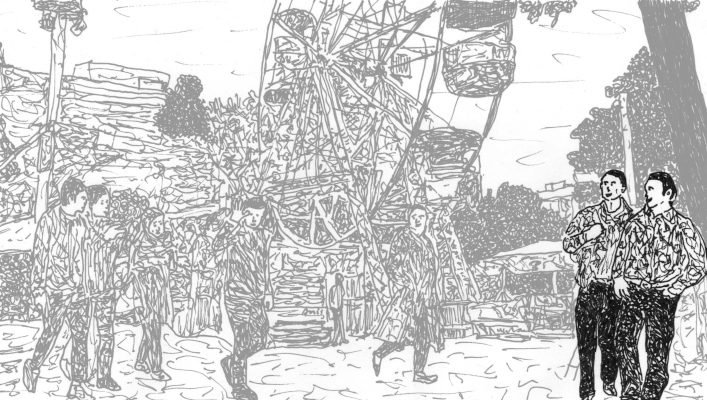 |
(Italiano) Heinz e Helmut raggiungono il loro gruppo nel vicino parco Rezvan, perché Ramin ha annunciato una buona notizia. Helmut non si lascia dissuadere dal fare un giro sulla ruota panoramica del parco, e forse non è affatto una cattiva idea. Anche se all'inizio Heinz la pensa diversamente. |
(Deutsch) Heinz und Helmut treffen ihre Gruppe im nahegelegenen Rezvan-Park, denn Ramin hat gute Nachrichten angekündigt. Helmut lässt sich nicht davon abbringen, im dortigen Riesenrad zu fahren, was vielleicht gar keine schlechte Idee ist. Auch wenn Heinz das zunächst anders sieht. Normal Version | ||
Tag 7 1 Heinz: Ich weiß nicht wieso, aber ich fühl mich hier irgendwie ... frei. Erstaunlich. Als hätte jemand eine Käseglocke über meinem Kopf weggenommen. Hel ... Wo ist der Typ? Oh nein, nicht schon wieder. |
Day 7 Heinz: I don't know why, but I kind of feel... free here. Amazing. As if someone had taken a cheese dome off my head. Hel... Where is the guy? Oh no, not again. |
Jour 7 Heinz : Je sais pas pourquoi, mais je me sens... libre ici. Étonnant. Comme si quelqu'un avait enlevé une cloche à fromage au-dessus de ma tête. Hel... Où est passé ce type ? Oh non, pas encore. |
Giorno 7 Heinz: Non so perché, ma qui mi sento in qualche modo... libero. Stupefacente. Come se qualcuno mi avesse tolto una campana di vetro dalla testa. Hel... Dov'è il tipo? Oh no, non di nuovo. |
En la noria Día 7 Heinz: No sé por qué, pero aquí me siento de alguna manera... libre. Fenomenal. Como si alguien me hubiera quitado una campana de queso de encima de la cabeza. Hel... ¿Dónde está el tipo? Oh no, otra vez no. |
2 Helmut: Ich hab immer noch nicht verstanden, warum Azad und seine Freunde so scharf darauf sind, das Chamäleon zu schnappen. Woher kennen die den überhaupt? |
Helmut: I still don't understand why Azad and his friends are so keen on nabbing the Chameleon. How do they even know him? |
Helmut : Je n'ai toujours pas compris pourquoi Azad et ses amis tiennent tant à mettre la main sur le Caméléon. Comment ils le connaissent, d'ailleurs ? |
Helmut: Non ho ancora capito perché Azad e i suoi amici siano così ansiosi di acchiappare il Camaleonte. Da dove lo conoscono, in fondo? |
Helmut: Todavía no he entendido por qué Azad y sus amigos tienen tantas ganas de atrapar al Camaleón. ¿De dónde lo conocen siquiera? |
3 Helmut: Heinz? Riesenrad? |
Helmut: Heinz? Ferris wheel? |
Helmut : Heinz ? La grande roue ? |
Helmut: Heinz? Ruota panoramica? |
Helmut: ¿Heinz? ¿La noria? |
4 Helmut: Alles geht, alles kommt zurück; ewig rollt das Rad des Seins. |
Helmut: Everything goes, everything comes back; eternally rolls the wheel of being. |
Helmut : Tout va, tout revient ; éternellement tourne la roue de l'être. |
Helmut: Tutto va, tutto ritorna; eternamente ruota la ruota dell'essere. |
Helmut: Todo va, todo vuelve; eternamente rueda la rueda del ser. |
(English) Who could be hiding behind the name Maryam Farhadi? The Boys want to find out and ring her doorbell. They also visit the Grand Bazaar in Tehran, where Helmut is already deeply disappointed after just a few minutes. |
 |
(Italiano) Chi si nasconde dietro il nome Maryam Farhadi? I Ragazzi vogliono scoprirlo e suonano alla sua porta. Inoltre, visitano il grande bazar di Teheran, dal quale però Helmut rimane già profondamente deluso dopo pochi minuti. |
(Deutsch) Wer mag sich hinter dem Namen Maryam Farhadi verbergen? Die Jungs wollen es herausfinden und klingeln an ihrer Tür. Außerdem besuchen sie den großen Bazar von Teheran, von dem Helmut aber nach wenigen Minuten bereits maßlos enttäuscht ist. Normal Version | ||
Reizwäsche Tag 8 1 Helmut: Was hat er gesagt? |
Lingerie Day 8 Helmut: What did he say? |
Lingerie sexy Jour 8 Helmut : Qu'est-ce qu'il a dit ? |
Lingerie sexy Giorno 8 Helmut: Che cosa ha detto? |
Lencería sexy Día 8 Helmut: ¿Qué ha dicho? |
2 Heinz: Äh, Maryam. Maryam Farhadi. Ah, die untere Klingel. Vielen Dank, jetzt kommen wir allein zurecht. Hambastegi, duustam! |
Heinz: Uh, Maryam. Maryam Farhadi. Ah, the bottom bell. Thank you very much, we can manage on our own now. Hambastegi, doostam! |
Heinz : Euh, Maryam. Maryam Farhadi. Ah, la sonnette du bas. Merci beaucoup, maintenant on se débrouille tout seuls. Hambastegi, doustam ! |
Heinz: Ehm, Maryam. Maryam Farhadi. Ah, il campanello in basso. Grazie mille, adesso ce la caviamo da soli. Hambastegi, duustam! |
Heinz: Eh, Maryam. Maryam Farhadi. Ah, el timbre de abajo. Muchas gracias, ahora nos las arreglamos solos. ¡Hambastegi, duustam! |
3 Helmut: Also so was! Nicht zu fassen. Vorsicht, Heinz, da kommt ein Auto! |
Helmut: Good grief! Unbelievable. Watch out, Heinz, there's a car coming! |
Helmut : Non mais vraiment ! C'est pas croyable. Attention, Heinz, une voiture arrive ! |
Helmut: Roba da matti! Incredibile. Attento, Heinz, arriva una macchina! |
Helmut: ¡Esto ya es el colmo! Increíble. ¡Cuidado, Heinz, viene un coche! |
4 Helmut: Das da zum Beispiel, was soll das sein? Ein Einteiler, der so gut wie nichts bedeckt. Ist das Seide? Ft ft |
Helmut: This one, for example, what is it supposed to be? A one-piece that covers practically nothing. Is that silk? Ft ft |
Helmut : Ça, par exemple, qu'est-ce que c'est censé être ? Un maillot une pièce qui ne cache pratiquement rien. C'est de la soie ? Ft ft |
Helmut: Quella, per esempio, che cosa dovrebbe essere? Un costume intero che non copre praticamente niente. È seta? Ft ft |
Helmut: Eso de ahí, por ejemplo, ¿qué se supone que es? Un bañador de una pieza que prácticamente no cubre nada. ¿Es seda? Ft ft |
(English) Palestine Square in Tehran is a place charged with symbolism. Heinz wants to take a photo there and soak up the history. As they talk about the monument on the traffic island, the Boys realize that it’s not just the square that has changed—they have, too. |
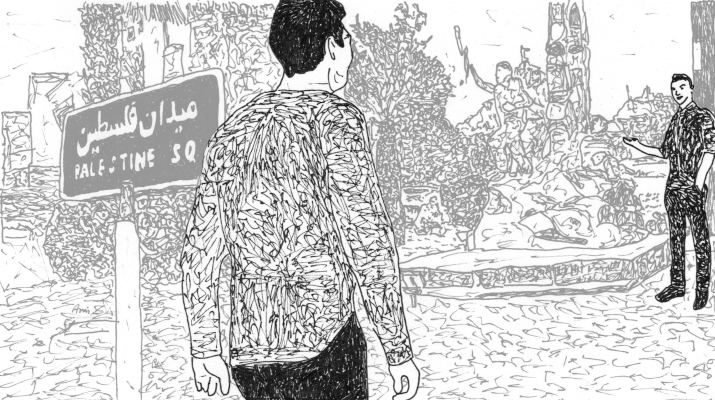 |
(Italiano) La piazza della Palestina a Teheran è un luogo ricco di significato simbolico. Heinz vorrebbe scattare una foto lì e respirare un po’ di storia. Mentre parlano del monumento sull’isola spartitraffico, i Ragazzi si rendono conto che non solo la piazza è cambiata, ma anche loro stessi. |
(Deutsch) Der Palästina-Platz in Teheran ist ein Ort voller Symbolkraft. Heinz möchte dort ein Foto machen und Geschichte atmen. Während sie sich auf der Verkehrsinsel über das Denkmal unterhalten, merken die Jungs, dass nicht nur der Platz Veränderungen erlebt hat, sondern auch sie selbst. Normal Version | ||
Veränderungen Tag 9 1 Helmut: Du hast gesagt, dass ich ein Foto von dir machen soll, und nicht, dass du mich durch die halbe Stadt schleifen willst. |
Changes Day 9 Helmut: You said I should take a picture of you, not that you wanted to drag me halfway across the city. |
Changements Jour 9 Helmut : Tu as dit que je devais prendre une photo de toi, pas que tu voulais me traîner à l'autre bout de la ville. |
Cambiamenti Giorno 9 Helmut: Hai detto che dovevo farti una foto, non che volevi trascinarmi dall'altra parte della città. |
Cambios Día 9 Helmut: Dijiste que querías que te hiciera una foto, no que me arrastraras por media ciudad. |
2 Heinz: Und was noch? |
Heinz: And what else? |
Heinz : Et quoi d'autre ? |
Heinz: E cos'altro? |
Heinz: ¿Y de qué más? |
3 Heinz: Doch, Helmut. Wer Israels Allmachtsfantasien behindert, kriegt Krieg. Und wer die USA kein Öl stehlen lässt, auch. Das hat die Geschichte gezeigt. Irak, Syrien, Libanon und so weiter. Die Iraner bleiben standhaft. Auch wenn Azad die Regierung für nicht konsequent genug hält. |
Heinz: It does, Helmut. Whoever gets in the way of Israel's fantasies of omnipotence gets war. And whoever won't let the U.S. steal its oil does too. History has shown that. Iraq, Syria, Lebanon and so on. The Iranians stand firm. Even though Azad thinks the government isn't consistent enough. |
Heinz : Si, Helmut. Celui qui entrave les fantasmes de toute-puissance d'Israël récolte la guerre. Et celui qui ne laisse pas les États-Unis lui voler son pétrole aussi. L'histoire l'a montré. L'Irak, la Syrie, le Liban et ainsi de suite. Les Iraniens restent fermes. Même si Azad trouve que le gouvernement ne va pas assez loin. |
Heinz: Invece sì, Helmut. Chi ostacola le fantasie di onnipotenza di Israele si becca la guerra. E anche chi non lascia che gli USA gli rubino il petrolio. La storia l'ha dimostrato. Iraq, Siria, Libano e così via. Gli iraniani rimangono fermi. Anche se Azad ritiene che il governo non sia abbastanza coerente. |
Heinz: Sí que lo hace, Helmut. Quien obstaculiza las fantasías de omnipotencia de Israel recibe guerra. Y quien no deja que Estados Unidos le robe el petróleo, también. La historia lo ha demostrado. Irak, Siria, Líbano y demás. Los iraníes se mantienen firmes. Aunque Azad considera que el gobierno no es lo bastante consecuente. |
4 Helmut: Das war bestimmt als nette Geste gemeint. |
Helmut: I'm sure they meant it as a nice gesture. |
Helmut : C'était sûrement censé être un geste sympa. |
Helmut: Sarà stato sicuramente un gesto gentile. |
Helmut: Seguro que lo dijeron como un gesto amable. |
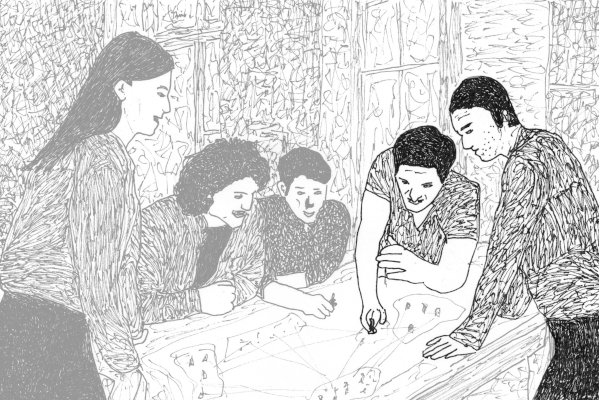
(English) Helmut generally enjoys learning new things, but what he’s experiencing today is completely overwhelming him. Information is pouring in from all sides, and even the most familiar things like language, drinking, and play suddenly turn into foreign and hard-to-decipher entities. |
 |
(Italiano) A Helmut piace imparare cose nuove in generale, ma quello che sta vivendo oggi lo mette davvero a dura prova. Le informazioni gli piovono addosso da tutte le parti e persino le cose più familiari, come la lingua, il bere e il gioco, si trasformano all’improvviso in entità estranee e difficili da decifrare. |
(Deutsch) Helmut lernt allgemein gern dazu, aber was er heute erlebt, überfordert ihn maßlos. Von allen Seiten prasseln Informationen auf ihn nieder und selbst die vertrautesten Dinge wie Sprache, Trinken und Spiel verwandeln sich plötzlich in fremde und schwer entzifferbare Entitäten. Normal Version | ||
Tag 12 1 Heinz: Hört ihr das? Ich glaub, Helmut ist zurück von seinem Spaziergang. |
Day 12 Heinz: Do you hear that? I think Helmut's back from his walk. |
Jour 12 Heinz : Vous entendez ça ? Je crois qu'Helmut est de retour de sa promenade. |
Giorno 12 Heinz: Lo sentite? Credo che Helmut sia tornato dalla sua passeggiata. |
Día 12 Heinz: ¿Oís eso? Creo que Helmut ya volvió de su paseo. |
2 Helmut: Gluck gluck schlork schmatz. Was?? Ein Milchgetränk mit Soda und Gewürzen? |
Helmut: Gulp gulp slurp smack. What?? A milk drink with soda and spices? |
Helmut : Glou glou miam smack. Quoi ?? Une boisson lactée avec du soda et des épices ? |
Helmut: Glug glug slurp miam. Cosa?? Una bevanda a base di latte con soda e spezie? |
Helmut: Glup glup sorp chasq. ¿¿Qué?? ¿Una bebida de leche con soda y especias? |
3 Helmut: Quatsch, ich spreche von Monopoly, Mann. Von den häuslichen Dramen meiner Jugend in Kiel-Düsternbrook. |
Helmut: Nonsense, I'm talking about Monopoly, man. About the domestic dramas of my youth in Kiel-Düsternbrook. |
Helmut : N'importe quoi, je parle du Monopoly, mec. Des drames domestiques de ma jeunesse à Kiel-Düsternbrook. |
Helmut: Ma va', parlo di Monopoly, amico. Dei drammi domestici della mia giovinezza a Kiel-Düsternbrook. |
Helmut: Qué va, hablo del Monopoly, tío. De los dramas domésticos de mi juventud en Kiel-Düsternbrook. |
4 Heinz: Helmut, wir spielen hier nicht Monopoly. Wir visualisieren auf dem Tisch lediglich das Netzwerk des Chamäleons. |
Heinz: Helmut, we're not playing Monopoly. We're merely visualizing the Chameleon's network on the table. |
Heinz : Helmut, on ne joue pas au Monopoly. On visualise simplement le réseau du Caméléon sur la table. |
Heinz: Helmut, non stiamo giocando a Monopoly. Stiamo semplicemente visualizzando sul tavolo la rete del Camaleonte. |
Heinz: Helmut, no estamos jugando al Monopoly. Simplemente estamos visualizando en la mesa la red del Camaleón. |
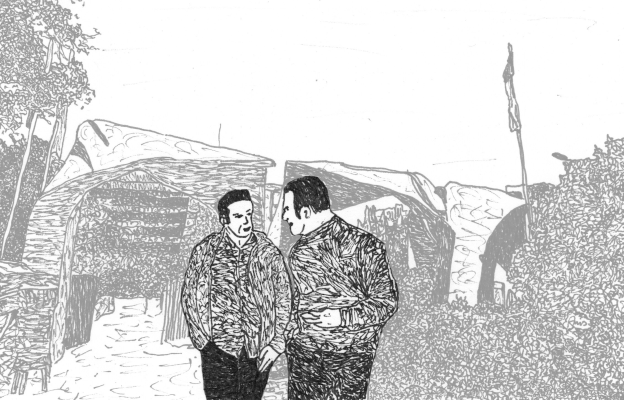
(English) The next day, the Boys learn more about the mathematician Maryam Farhadi, as they manage to reach her assistant at the University of Tehran. After he explains the situation to them, the two disagree about how they should proceed. |
 |
(Italiano) Il giorno dopo, i Ragazzi scoprono qualcosa in più sulla matematica Maryam Farhadi, perché riescono a raggiungere il suo assistente all'Università di Teheran. Dopo che lui ha spiegato loro la situazione, i due non sono d'accordo su come procedere. |
(Deutsch) Am nächsten Tag erfahren die Jungs mehr über die Mathematikerin Maryam Farhadi, denn sie erreichen ihren Assistenten in der Universität von Teheran. Nachdem er ihnen die Sachlage erklärt hat, sind sich die beiden nicht einig darüber, wie sie weiter vorgehen sollen. Normal Version | ||
Auf dem Campus Tag 13 1 Helmut: Da vorne dann links? |
On Campus Day 13 Helmut: So it's left up ahead? |
Sur le campus Jour 13 Helmut : Alors, c'est à gauche devant ? |
Nel campus Giorno 13 Helmut: Quindi è lì davanti a sinistra? |
En el campus Día 13 Helmut: ¿Entonces allí delante a la izquierda? |
2 Helmut: Da winkt einer. |
Helmut: There's someone waving. |
Helmut : Voilà quelqu'un qui fait signe. |
Helmut: C'è uno che fa cenno. |
Helmut: Hay alguien saludando con la mano. |
3 Heinz: Er sagt, dass er Doktorand ist. |
Heinz: He says he's a doctoral candidate. |
Heinz : Il dit qu'il est doctorant. |
Heinz: Dice che è un dottorando. |
Heinz: Dice que es doctorando. |
4 Helmut: Und warum? Was heißt: „Ist einfach so”? |
Helmut: And why? What do you mean, "That's just the way it is"? |
Helmut : Et pourquoi ? Qu'est-ce que ça veut dire, « C'est comme ça » ? |
Helmut: E perché? Cosa vuol dire: "È semplicemente così"? |
Helmut: ¿Y por qué? ¿Qué significa "Así son las cosas"? |
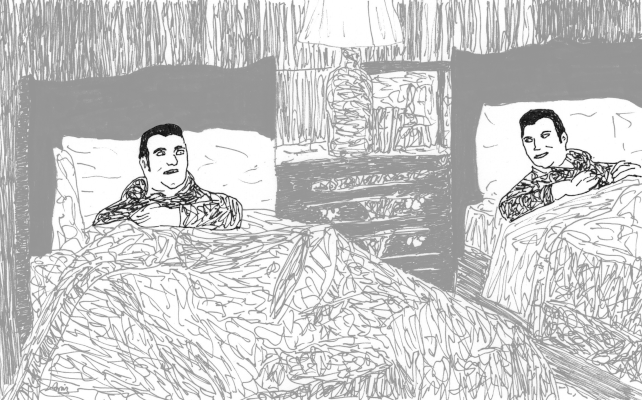
(English) Helmut can't sleep and gets Heinz into a conversation. The two of them have now been in Iran for two weeks, and Helmut is slowly starting to get homesick. Carefully and tactfully, he asks his roommate about the plans for what comes next. |
 |
(Italiano) Helmut non riesce a dormire e coinvolge Heinz in una conversazione. Sono ormai due settimane che i due si trovano in Iran e Helmut comincia lentamente a sentire la nostalgia di casa. Con cautela e tatto, chiede al suo compagno di stanza quali siano i programmi per il prosieguo. |
(Deutsch) Helmut kann nicht schlafen und verwickelt Heinz in ein Gespräch. Seit zwei Wochen sind die beiden nun schon im Iran und Helmut bekommt langsam Heimweh. Vorsichtig und taktvoll erkundigt er sich bei seinem Zimmergenossen über die weiteren Planungen. Normal Version | ||
Tag 14 1 Helmut: Heinz, schläfst du schon? |
Day 14 Helmut: Heinz, are you asleep already? |
Jour 14 Helmut : Heinz, tu dors déjà ? |
Giorno 14 Helmut: Heinz, dormi già? |
Día 14 Helmut: Heinz, ¿ya estás dormido? |
2 Heinz: Helmut, der Iran ist Opfer eines brutalen Angriffskriegs gegen die gesamte Bevölkerung. Das ist ein anderer Maßstab. Außerdem hab ich berechtigte Zweifel, was westliche Darstellungen angeht. Die haben einen Narren am Iran gefressen. Und an Palästina. Und an Russland. |
Heinz: Helmut, Iran is the victim of a brutal war of aggression against the entire population. That's a different dimension. Besides, I have legitimate doubts about Western portrayals. They've got it in for Iran. And Palestine. And Russia. |
Heinz : Helmut, l'Iran est victime d'une guerre d'agression brutale contre l'ensemble de sa population. Ce n'est pas le même ordre de grandeur. En plus, j'ai de sérieux doutes concernant les représentations occidentales. Ils en ont après l'Iran. Et la Palestine. Et la Russie. |
Heinz: Helmut, l'Iran è vittima di una brutale guerra d'aggressione contro l'intera popolazione. È un altro metro di giudizio. Inoltre, ho legittimi dubbi riguardo alle rappresentazioni occidentali. Ce l'hanno con l'Iran. E con la Palestina. E con la Russia. |
Heinz: Helmut, Irán es víctima de una brutal guerra de agresión contra toda la población. Es otro baremo. Además, tengo serias dudas respecto a las representaciones occidentales. La han tomado con Irán. Y con Palestina. Y con Rusia. |
3 Helmut: Außerdem haben wir die Schaltstellen der Macht nicht kennengelernt, die turbanisierten Bärtigen, die heimlich und verborgen hinter den Kulissen die Strippen des Wahnsinns ziehen. |
Helmut: Besides, we haven't met the power brokers, the turbanized bearded men who secretly and hidden away behind the scenes pull the strings of madness. |
Helmut : Et puis, on n'a pas rencontré les hommes aux commandes du pouvoir, les barbus enturbannés qui, en secret et cachés derrière les coulisses, tirent les ficelles de la folie. |
Helmut: E poi non abbiamo conosciuto i centri di potere, i barbuti turbanizzati che, segretamente e nascosti dietro le quinte, tirano le fila della follia. |
Helmut: Además, no hemos conocido a los que manejan los resortes del poder, a los barbudos turbanizados que, en secreto y ocultos entre bastidores, mueven los hilos de la locura. |
4 Helmut: Lass uns schlafen jetzt! |
Helmut: Let's go to sleep now! |
Helmut : Allons dormir maintenant ! |
Helmut: Adesso dormiamo! |
Helmut: ¡Venga, vamos a dormir ya! |
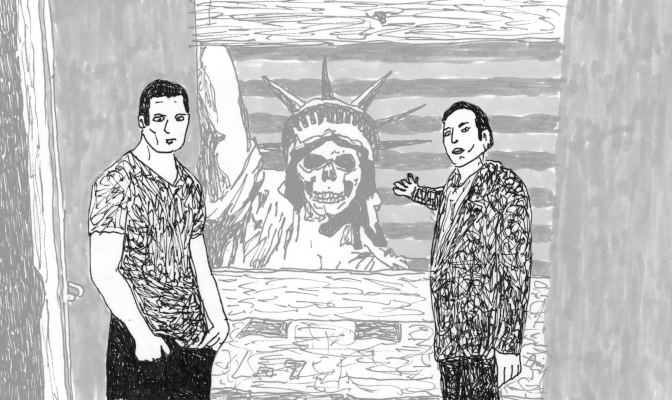
(English) Resentment is building up inside Helmut. Heinz takes him to the places that interest him, and he shows absolutely no consideration. On the contrary, just when Helmut gets curious at the museum and begins to enjoy the whole thing, his so-called friend simply ends the visit. |
 |
(Italiano) Il malcontento si accumula dentro Helmut. Heinz lo porta nei luoghi che lo interessano e non ha assolutamente riguardo per lui. Anzi, proprio quando Helmut si incuriosisce al museo e comincia a godersi la visita, il suo cosiddetto amico la interrompe e basta. |
(Deutsch) In Helmut braut sich Unmut zusammen. Heinz führt ihn zu den Orten, die ihn interessieren, und er nimmt überhaupt keine Rücksicht. Im Gegenteil, als Helmut im Museum neugierig wird und die Sache zu genießen beginnt, beendet sein sogenannter Freund den Besuch einfach. Normal Version | ||
Papierstreifen Tag 17 1 Helmut: Ach Mann, ich will nicht schon wieder ein Museum ankucken! |
Day 17 Helmut: Aw man, I don't want to go see another museum! |
Jour 17 Helmut : Oh mec, j'ai pas envie d'aller voir encore un musée ! |
Giorno 17 Helmut: Oh amico, non ho proprio voglia di andare a vedere un altro museo! |
Día 17 Helmut: ¡Vaya, tío, no me apetece ir a ver otro museo! |
2 Helmut: Ich meine, je länger wir uns in der Öffentlichkeit präsentieren, desto wahrscheinlicher wird es, dass wir irgendwann angehalten werden. Also? |
Helmut: I mean, the longer we show ourselves in public, the more likely it is that we'll eventually get stopped. So? |
Helmut : Je veux dire, plus on se montre en public, plus il est probable qu'on finisse par se faire arrêter. Alors ? |
Helmut: Voglio dire, più a lungo ci mostriamo in pubblico, più è probabile che prima o poi ci fermino. Allora? |
Helmut: Quiero decir, cuanto más tiempo nos mostremos en público, más probable será que tarde o temprano nos paren. ¿Y bien? |
3 Heinz: Helmut, ich weiß nicht, wie du das gemacht hast, aber wir sind im Jahr 1979, als iranische Studenten die Botschaft gestürmt und besetzt haben. |
Heinz: Helmut, I don't know how you did it, but we're back in the year 1979, when Iranian students stormed and occupied the embassy. |
Heinz : Helmut, je ne sais pas comment tu as fait, mais on est en 1979, quand des étudiants iraniens ont pris d'assaut et occupé l'ambassade. |
Heinz: Helmut, non so come hai fatto, ma siamo nel 1979, quando gli studenti iraniani assaltarono e occuparono l'ambasciata. |
Heinz: Helmut, no sé cómo lo has hecho, pero estamos en el año 1979, cuando unos estudiantes iraníes asaltaron y ocuparon la embajada. |
4 Heinz: (Lass uns vorsichtig rückwärts durch die Tür gehen!) |
Heinz: (Let's carefully back out through the door!) |
Heinz : (Sortons prudemment à reculons par la porte !) |
Heinz: (Usciamo con cautela dalla porta all'indietro!) |
Heinz: (¡Salgamos con cuidado marcha atrás por la puerta!) |
(English) In a bad mood, Heinz and Helmut get out of the taxi that has brought them to the meeting point. Should they even be talking to third parties in this state? The past has shown that this can quickly lead to unpleasant situations. |
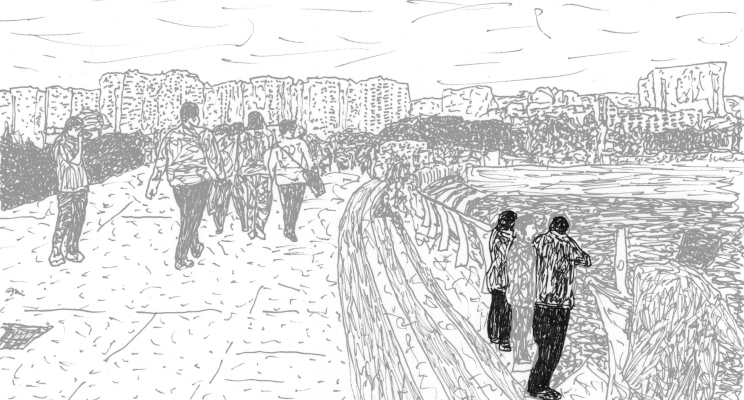 |
(Italiano) Di cattivo umore, Heinz e Helmut scendono dal taxi che li ha portati al punto d’incontro. Dovrebbero davvero parlare con dei terzi in questo stato? Il passato ha dimostrato che questo può portare rapidamente a situazioni spiacevoli. |
(Deutsch) Übel gelaunt steigen Heinz und Helmut aus ihrem Taxi, das sie zum Treffpunkt gebracht hat. Sollten sie in diesem Zustand überhaupt Gespräche mit Dritten führen? Die Vergangenheit hat gezeigt, dass das schnell zu unangenehmen Situationen führen kann. Normal Version | ||
Tag 17 1 Helmut: Danke, äh, memnuun. Zahlen tut der da. Heinz? Zahl mal das Taxi! Kt |
Day 17 Helmut: Thanks, uh, memnoon. He's paying. Heinz? Pay for the taxi! Kt |
Jour 17 Helmut : Merci, euh, memnoun. C'est lui qui paie. Heinz ? Paie le taxi ! Kt |
Giorno 17 Helmut: Grazie, ehm, memnuun. Ci paga lui. Heinz? Paga il taxi! Kt |
Día 17 Helmut: Gracias, eh, memnuun. Ese de ahí paga. ¿Heinz? ¡Paga el taxi! Kt |
2 Helmut: Man kann den Übersetzer direkt mit dem Handy verbinden? |
Helmut: You can connect the translator directly to the phone? |
Helmut : On peut connecter directement le traducteur au téléphone ? |
Helmut: Si può collegare direttamente il traduttore al cellulare? |
Helmut: ¿Se puede conectar directamente el traductor al móvil? |
3 Helmut: Maryam, erzähl uns auch was von dir. Du bist Mathematikerin? Was macht man da so? Hyperbolische Geometrie, aha. Modulräume von Riemannschen Flächen, wow. |
Helmut: Maryam, tell us something about yourself, too. You're a mathematician? What do you do? Hyperbolic geometry, aha. Moduli spaces of Riemann surfaces, wow. |
Helmut : Maryam, raconte-nous aussi quelque chose sur toi. Tu es mathématicienne ? Qu'est-ce que tu fais ? Géométrie hyperbolique, ah bon. Espaces de modules de surfaces de Riemann, waouh. |
Helmut: Maryam, raccontaci qualcosa anche di te. Sei una matematica? Che cosa fai? Geometria iperbolica, aha. Spazi di moduli di superfici di Riemann, wow. |
Helmut: Maryam, cuéntanos algo también sobre ti. ¿Eres matemática? ¿A qué te dedicas? Geometría hiperbólica, ajá. Espacios de módulos de superficies de Riemann, guau. |
4 Helmut: Maryam, wir haben vor einer Stunde eine Zeitreise ins Jahr 1979 gemacht und ich hab es Heinz zuerst nicht geglaubt. |
Helmut: Maryam, an hour ago we time-traveled to 1979 and at first I didn't believe Heinz. |
Helmut : Maryam, il y a une heure, on a fait un voyage dans le temps jusqu'en 1979 et au début, je n'ai pas cru Heinz. |
Helmut: Maryam, un'ora fa abbiamo fatto un viaggio nel tempo fino al 1979 e all'inizio non ho creduto a Heinz. |
Helmut: Maryam, hace una hora hicimos un viaje en el tiempo hasta 1979 y al principio no le creí a Heinz. |
(English) In the following days, Heinz spends a lot of time with Maryam, because the two of them have quite a bit to discuss. Helmut, meanwhile, has to find other ways to keep himself occupied. He doesn't know yet that the Boys will soon be setting off on a new journey that will put an end to his boredom. |
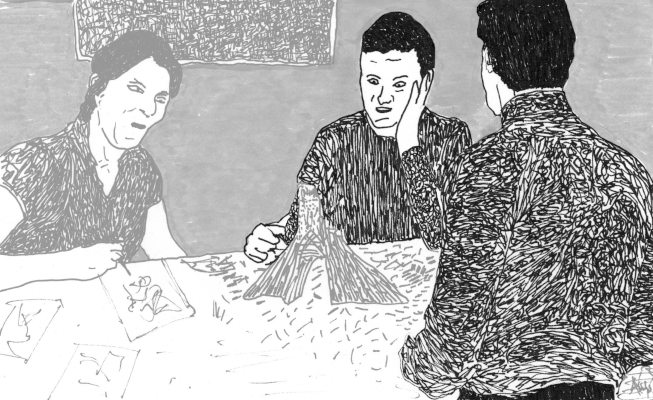 |
(Italiano) Nei giorni seguenti, Heinz dedica molto tempo a Maryam, perché i due hanno parecchie cose da discutere. Helmut, nel frattempo, deve trovare qualcos’altro per tenersi occupato. Non sa ancora che i Ragazzi partiranno presto per un nuovo viaggio che metterà fine alla sua noia. |
(Deutsch) Heinz nimmt sich in den folgenden Tagen viel Zeit für Maryam, denn die beiden haben allerhand zu besprechen. Helmut muss sich derweil anderweitig beschäftigen. Er weiß noch nicht, dass die Jungs schon bald auf eine neue Reise gehen, die seine Langeweile beenden wird. Normal Version | ||
Tag 24 1 Helmut: Ah, Heinz, heute erst so spät. Wie war deine Session mit Maryam? |
Day 24 Helmut: Ah, Heinz, you're late today. How was your session with Maryam? |
Jour 24 Helmut : Ah, Heinz, aujourd'hui si tard. Comment s'est passée ta séance avec Maryam ? |
Giorno 24 Helmut: Ah, Heinz, oggi così tardi. Com'è andata la tua sessione con Maryam? |
Día 24 Helmut: Ah, Heinz, hoy sí que llegas tarde. ¿Qué tal tu sesión con Maryam? |
2 Heinz: OK, das ist eindeutig. Wie wär's dann mit einem neuen Buch? Das hier hat Maryam mir heute geschenkt. Klatsch |
Heinz: OK, that's pretty clear. How about a new book, then? Maryam gave me this one today. Slam |
Heinz : OK, c'est clair. Alors, que dis-tu d'un nouveau livre ? Maryam m'a offert celui-ci aujourd'hui. Claque |
Heinz: OK, è inequivocabile. Che ne dici allora di un libro nuovo? Questo me l'ha regalato oggi Maryam. Tonf |
Heinz: OK, eso está claro. ¿Qué tal un libro nuevo, entonces? Maryam me ha regalado este hoy. ¡Zas! |
3 Heinz: Übrigens, ich war noch bei Ramin. Unsere Visa sind fertig. Klatsch |
Heinz: By the way, I also stopped by to see Ramin. Our visas are ready. Slam |
Heinz : Au fait, je suis aussi passé chez Ramin. Nos visas sont prêts. Claque |
Heinz: A proposito, sono stato anche da Ramin. I nostri visti sono pronti. Tonf |
Heinz: Por cierto, también pasé por donde Ramin. Nuestros visados están listos. ¡Zas! |
4 Helmut: Therapiesitzungen, Streichholzgebäude und Rundreisen? Ghada, und du? Fährst du mit uns mit? Du bleibst bei Maryam? Wie du meinst. Massentherapie, was? |
Helmut: Therapy sessions, matchstick buildings, and road trips? Ghada, what about you? Are you coming with us? You're staying with Maryam? As you like. Mass therapy, huh? |
Helmut : Séances de thérapie, bâtiments en allumettes et circuits touristiques ? Ghada, et toi ? Tu viens avec nous ? Tu restes chez Maryam ? Comme tu veux. Thérapie de masse, hein ? |
Helmut: Sedute di terapia, edifici di fiammiferi e giri turistici? Ghada, e tu? Vieni con noi? Rimani da Maryam? Come vuoi. Terapia di massa, eh? |
Helmut: ¿Sesiones de terapia, edificios de cerillas y giras? Ghada, ¿y tú? ¿Vienes con nosotros? ¿Te vas a quedar con Maryam? Como quieras. Terapia en masa, ¿eh? |
(English) While the Boys are looking forward to their outing, the Gals have settled back into everyday life after the summer vacation. However, it’s no longer the same everyday life, because a little boy has entered Fiona’s life, and today she realizes just how important he has become to her. |
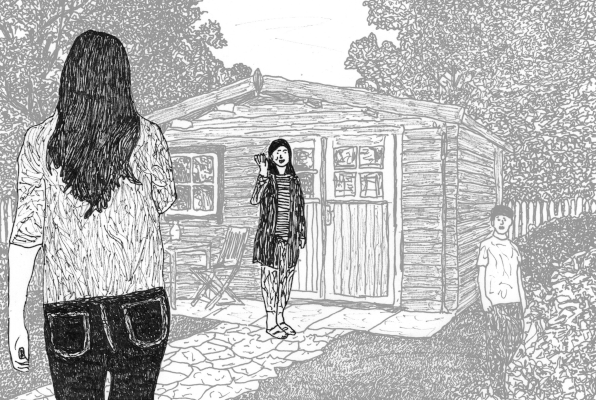 |
(Italiano) Mentre i Ragazzi non vedono l’ora di fare la loro gita, le Ragazze sono tornate alla vita quotidiana dopo le vacanze estive. Però non è più la stessa vita di tutti i giorni, perché un ragazzino è entrato nella vita di Fiona e oggi lei si rende conto di quanto sia diventato importante per lei. |
(Deutsch) Während sich die Jungs auf ihren Ausflug freuen, sind die Mädels nach den Sommerferien wieder im Alltag angekommen. Allerdings ist es nicht mehr derselbe Alltag, denn ein kleiner Junge ist in Fionas Leben getreten und heute merkt sie, wie wichtig er ihr geworden ist. Normal Version | ||
Tag 24 1 Fiona: Sehr gut hast du das gemacht, Franz! Ja, ich seh es, du hast die Seiten professionell eingefaltet. Ich bin auch fertig. Jetzt legen wir die Dinger in den Topf und kochen sie. Stell dich auf den Stuhl, dann kannst du alles sehen. Aber vorsichtig! |
Unusable Story Day 24 Fiona: You did a great job with that, Franz! Yes, I can see it, you folded the sides like a pro. I'm done too. Now let's put the things in the pot and cook them. Stand on the chair, then you can see everything. But be careful! |
Histoire inutilisable Jour 24 Fiona : Tu as très bien fait ça, Franz ! Oui, je vois, tu as plié les côtés comme un pro. J'ai fini aussi. Maintenant, on tout met ça dans la casserole et on fait cuire. Monte sur la chaise, comme ça tu peux tout voir. Mais fais attention ! |
Storia inutilizzabile Giorno 24 Fiona: Sei stato bravissimo, Franz! Sì, lo vedo, hai piegato i bordi come un professionista. Ho finito anch'io. Adesso mettiamo le cose nella pentola e le facciamo cuocere. Sali sulla sedia, così puoi vedere tutto. Ma attento! |
Historia inutilizable Día 24 Fiona: ¡Lo has hecho muy bien, Franz! Sí, lo veo, has doblado los lados como un profesional. Yo también he terminado. Ahora metemos las cosas en la olla y las cocemos. Súbete a la silla, así puedes verlo todo. ¡Pero con cuidado! |
2 Fanni: Franz hat vor mir ausgespuckt und mir dann die Zunge rausgestreckt. Ich dachte, er hat in seinen langen Ferien bei Fibi Manieren angenommen. Oh, das riecht gut, was gibt es denn? |
Fanni: Franz spat in front of me and then stuck his tongue out at me. I thought he'd picked up some manners during his long vacation at Feebee's. Oh, that smells good, what's for dinner? |
Fanni : Franz m'a craché devant moi et m'a ensuite tiré la langue. Je pensais qu'il avait appris les bonnes manières pendant ses longues vacances chez Fibi. Oh, ça sent bon, qu'est-ce qu'il y a ? |
Fanni: Franz mi ha sputato davanti e poi mi ha fatto la linguaccia. Pensavo che durante le sue lunghe vacanze da Fibi avesse imparato le buone maniere. Oh, che buon profumo, che cos'è? |
Fanni: Franz me escupió delante y luego me sacó la lengua. Pensaba que durante sus largas vacaciones con Fibi había aprendido modales. Oh, qué bien huele, ¿qué hay? |
3 Fanni: Und was ist dabei rausgekommen? Die ist doch komplett irre. |
Fanni: And what did they find? She's completely nuts, that woman. |
Fanni : Et qu'est-ce que ça a donné ? Elle est complètement dingue, quand même. |
Fanni: E che cosa è venuto fuori? È completamente matta, la donna. |
Fanni: ¿Y qué salió de ahí? Está completamente loca, esa mujer. |
4 Fiona: Das kommt von nebenan. Oh nein, das Gartenhaus von der Schludermeier steht in Flammen! Franz! |
Fiona: It's coming from next door. Oh no, Mrs. Slobmeyer's garden shed is on fire! Franz! |
Fiona : Ça vient d'à côté. Oh non, l'abri de jardin de Madame Bâclemeier est en feu ! Franz ! |
Fiona: Viene da qui accanto. Oh no, la casetta da giardino della signora Allacarlonameier è in fiamme! Franz! |
Fiona: Viene de al lado. ¡Oh, no, la caseta del jardín de la señora Chapucemeier está en llamas! ¡Franz! |
(English) Heinz is at a loss when it comes to his friend’s behavior. Helmut is doing and saying things that don’t fit him. Or do they? Let’s hear what Helmut himself has to say about it, because the other side should at least be given a chance to speak. |
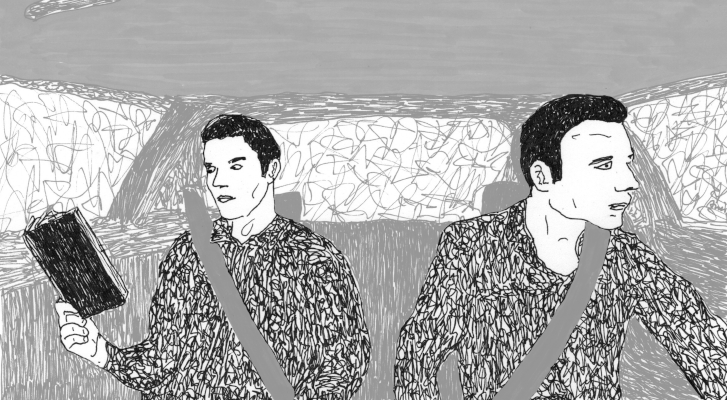 |
(Italiano) Heinz è perplesso di fronte al comportamento del suo amico. Helmut fa e dice cose che non gli si addicono. O forse sì? Sentiamo cosa ha da dire Helmut stesso al riguardo, perché almeno l’altra parte dovrebbe avere la possibilità di dire la sua. |
(Deutsch) Heinz ist ratlos, was das Verhalten seines Freundes angeht. Helmut tut und sagt Dinge, die nicht zu ihm passen. Oder doch? Hören wir uns an, was Helmut selbst dazu zu sagen hat, denn man sollte die andere Seite zumindest zu Wort kommen lassen. Normal Version | ||
Tag 25 1 Heinz: Willst du dich jetzt die ganze Fahrt über mit dem Persisch-Lehrbuch beschäftigen? |
Day 25 Heinz: Are you going to spend the whole trip poring over that Persian textbook? |
Jour 25 Heinz : Tu vas passer tout le trajet à t'occuper de ce manuel de persan ? |
Giorno 25 Heinz: Hai intenzione di passare tutto il viaggio a occuparti di quel manuale di persiano? |
Día 25 Heinz: ¿Te vas a pasar todo el viaje metido en el libro de persa? |
2 Heinz: Nun, das ist eher unwahrscheinlich. Das Grundproblem ist nicht gelöst, solange die Bedrohung fortbesteht. Der Iran muss sich sicher und respektiert fühlen können. Die angebliche Bedrohung durch iranische Atomwaffen wiederum ist konstruiert und existiert nicht wirklich. |
Heinz: Well, that's rather unlikely. The fundamental problem hasn't been solved as long as the threat continues. Iran has to be able to feel safe and respected. The alleged threat from Iranian nuclear weapons, on the other hand, is fabricated and doesn't exist in reality. |
Heinz : Eh bien, c'est plutôt improbable. Le problème fondamental n'est pas résolu tant que la menace persiste. L'Iran doit pouvoir se sentir en sécurité et respecté. La prétendue menace des armes nucléaires iraniennes, quant à elle, est une invention et n'existe pas réellement. |
Heinz: Beh, è piuttosto improbabile. Il problema di fondo non è risolto finché la minaccia persiste. L'Iran deve poter sentirsi al sicuro e rispettato. La presunta minaccia delle armi nucleari iraniane, invece, è inventata e non esiste realmente. |
Heinz: Bueno, es bastante improbable. El problema fundamental no está resuelto mientras persista la amenaza. Irán tiene que poder sentirse seguro y respetado. La supuesta amenaza de las armas nucleares iraníes, en cambio, está fabricada y en realidad no existe. |
3 Helmut: Was meinst du? Wir führen eine ganz normale Unterhaltung. |
Helmut: What do you mean? We're having a perfectly normal conversation. |
Helmut : Qu'est-ce que tu veux dire ? On a une conversation tout à fait normale. |
Helmut: Cosa intendi? Stiamo facendo una conversazione del tutto normale. |
Helmut: ¿A qué te refieres? Estamos teniendo una conversación completamente normal. |
4 Helmut: Hast du nicht selbst auf dem geschichtsträchtigen Palästina-Platz darauf hingewiesen, dass auch wir uns verändert haben? |
Helmut: Didn't you yourself point out at the historically significant Palestine Square that we, too, have changed? |
Helmut : Tu n'as pas toi-même fait remarquer, sur la place de Palestine chargée d'histoire, que nous aussi, on avait changé ? |
Helmut: Non hai fatto notare tu stesso, sulla storica Piazza della Palestina, che anche noi siamo cambiati? |
Helmut: ¿No señalaste tú mismo, en la histórica Plaza de Palestina, que nosotros también hemos cambiado? |
(English) The Boys don’t know it, but this is their 500th adventure. And it’s not any ordinary adventure, but a double one, no, a threefold magical one! It’s just a shame that Helmut doesn’t realize any of this. But Heinz will surely tell him all about it in every little detail afterward. |
 |
(Italiano) I Ragazzi non lo sanno, ma questa è la loro 500ª avventura. E non è una normale avventura, ma una doppia, anzi, una triplice magica! Peccato solo che Helmut non si accorga di nulla. Ma Heinz gli racconterà sicuramente tutto per filo e per segno dopo. |
(Deutsch) Die Jungs wissen es nicht, aber dies ist ihr 500-stes Abenteuer. Und es ist nicht irgendein herkömmliches Abenteuer, sondern ein doppeltes, nein, ein dreifach magisches! Schade nur, dass Helmut nichts davon mitbekommt. Aber Heinz wird ihm danach bestimmt alles haarklein erzählen. Normal Version | ||
Die halbe Welt Tag 26 1 Helmut: Heinz, hör mal! Shirin und Mehdi haben mir ein Sprichwort gesagt: „Isfahan ist die halbe Welt.” Ha! Was für eine Stadt! Die Brücke über den Fluss vorhin, zum Beispiel. Pit-to-resk. |
Day 26 Helmut: Heinz, listen! Shirin and Mehdi told me a proverb: "Isfahan is half the world." Ha! What a city! The bridge over the river earlier, for example. Pic-tur-esque. |
Jour 26 Helmut : Heinz, écoute ! Shirin et Mehdi m'ont dit un proverbe : « Ispahan est la moitié du monde. » Ha ! Quelle ville ! Le pont au-dessus de la rivière tout à l'heure, par exemple. Pit-to-resque. |
Giorno 26 Helmut: Heinz, ascolta! Shirin e Mehdi mi hanno detto un proverbio: "Isfahan è metà del mondo." Ah! Che città! Il ponte sul fiume di prima, per esempio. Pit-to-res-co. |
Día 26 Helmut: ¡Heinz, escucha! Shirin y Mehdi me han dicho un proverbio: "Isfahán es la mitad del mundo". ¡Ja! ¡Qué ciudad! El puente sobre el río de antes, por ejemplo. Pin-to-res-co. |
2 Helmut: Cool, oder? Und keine Sorge. Ich bin immer in deiner Nähe. Du kannst auf mich zählen. Als Beschützer, Freund, Logenbruder, äh, Manager ... |
Helmut: Cool, isn't it? And don't worry. I'm always close by your side. You can count on me. As a protector, friend, lodge brother, uh, manager... |
Helmut : Cool, non ? Et ne t'inquiète pas. Je suis toujours près de toi. Tu peux compter sur moi. En tant que protecteur, ami, frère de loge, euh, manager... |
Helmut: Fico, vero? E non preoccuparti. Sono sempre vicino a te. Puoi contare su di me. Come protettore, amico, confratello della loggia, ehm, manager... |
Helmut: ¿Mola, no? Y no te preocupes. Siempre estoy cerca de ti. Puedes contar conmigo. Como protector, amigo, hermano de la logia, eh, mánager... |
3 Heinz: Seht ihr auch, was ich sehe? Eure Blicke sagen Ja. Was für ein Bazar! Wir sind ... Gevork, welches Jahr schreiben wir? |
Heinz: Do you guys see what I see? Your looks say yes. What a bazaar! We're... Gevork, what year is it? |
Heinz : Vous voyez aussi ce que je vois ? Vos regards disent oui. Quel bazar ! On est... Gevork, on est en quelle année ? |
Heinz: Vedete anche voi quello che vedo io? I vostri sguardi dicono di sì. Che bazar! Siamo... Gevork, che anno è? |
Heinz: ¿Vosotros también veis lo que veo yo? Vuestras miradas dicen que sí. ¡Qué bazar! Estamos... Gevork, ¿en qué año estamos? |
4 Heinz: Sag mal, Gevork, wie hat dich der Besitzer des fliegenden Teppichs überhaupt erkannt? In Helmuts Körper? |
Heinz: Tell me, Gevork, how did the owner of the flying carpet recognize you in the first place? In Helmut's body? |
Heinz : Dis-moi, Gevork, comment le propriétaire du tapis volant t'a-t-il reconnu, au juste ? Dans le corps de Helmut ? |
Heinz: Dimmi, Gevork, come ha fatto il proprietario del tappeto volante a riconoscerti? Nel corpo di Helmut? |
Heinz: Oye, Gevork, ¿cómo te reconoció el dueño de la alfombra voladora? ¿Dentro del cuerpo de Helmut? |
(English) The group stays at Naqsh-e Jahan Square until after midnight. While the Iranians recover from the shock of time travel, Helmut expresses some psychological and philosophical thoughts that have been occupying his mind for the past few days. Heinz finds it difficult to respond to them. |
 |
(Italiano) Il gruppo rimane sulla piazza Naqsh-e Jahan fino a dopo mezzanotte. Mentre gli iraniani si riprendono dallo shock del viaggio nel tempo, Helmut esprime alcuni pensieri psicologici e filosofici che lo occupano da qualche giorno. Heinz fa fatica a reagire. |
(Deutsch) Die Gruppe bleibt bis nach Mitternacht auf dem Naqsche-Dschahaan-Platz. Während sich die Iraner vom Schock der Zeitreise erholen, äußert Helmut einige psychologisch-philosophische Gedanken, die ihn seit mehreren Tagen beschäftigen. Heinz fällt es schwer, darauf zu reagieren. Normal Version | ||
Eine neue Ebene Tag 26 1 Heinz: Und du bist gar nicht sauer oder traurig, weil du den fliegenden Teppich verpasst hast? |
A New Level Day 26 Heinz: And you're not angry or sad at all because you missed the flying carpet? |
Jour 26 Heinz : Et tu n'es pas du tout fâché ou triste d'avoir raté le tapis volant ? |
Un nuovo livello Giorno 26 Heinz: E non sei per niente arrabbiato o triste per aver perso il tappeto volante? |
Un nuevo nivel Día 26 Heinz: ¿Y no estás nada enfadado ni triste por haberte perdido la alfombra voladora? |
2 Helmut: Kein Wunder. Aaaaach seufz. Am besten hat mir heute die Imam-Moschee gefallen. Und die Gärten! Tschehél Sotuun. Ein herrlicher Tag! |
Helmut: No wonder. Aaaaah sigh. What I liked best today was the Imam Mosque. And the gardens! Tshehel Sotoon. A wonderful day! |
Helmut : Pas étonnant. Aaaaah soupir. Ce que j'ai préféré aujourd'hui, c'est la mosquée de l'Imam. Et les jardins ! Tchehel Sotoun. Quelle merveilleuse journée ! |
Helmut: Non c'è da stupirsi. Aaaaah sospir. Oggi mi è piaciuta soprattutto la Moschea dell'Imam. E i giardini! Chehel Sotoun. Una giornata magnifica! |
Helmut: No me extraña. Aaaaah suspir. Lo que más me ha gustado hoy ha sido la Mezquita del Imán. ¡Y los jardines! Chehel Sotoun. ¡Un día maravilloso! |
3 Helmut: Immer wenn ein Imperium stürzt, kommt ein neues. Das ist frustrierend, oder? |
Helmut: Whenever an empire falls, a new one rises. That's frustrating, isn't it? |
Helmut : À chaque fois qu'un empire s'effondre, un nouveau prend le relais. C'est frustrant, non ? |
Helmut: Ogni volta che cade un impero, ne arriva uno nuovo. È frustrante, no? |
Helmut: Cada vez que cae un imperio, viene uno nuevo. Es frustrante, ¿no? |
4 Helmut: Du hast völlig recht. Nur eine Sache ... |
Helmut: You're absolutely right. Just one thing... |
Helmut : T'as tout à fait raison. Juste une chose… |
Helmut: Hai perfettamente ragione. Solo una cosa... |
Helmut: Tienes toda la razón. Solo una cosa... |
(English) The Boys spend several more days with Shirin and Mehdi until they set off on the second leg of their journey. Helmut notices that his friend is going through a phase of transformation, and he does his best to convince him that this is a good thing. |
 |
(Italiano) I Ragazzi passano ancora alcuni giorni con Shirin e Mehdi, finché non partono per la seconda tappa del loro viaggio. Helmut si accorge che il suo amico sta attraversando una fase di trasformazione e fa del suo meglio per convincerlo che è una cosa positiva. |
(Deutsch) Die Jungs verbringen einige weitere Tage mit Shirin und Mehdi, bis sie zur zweiten Etappe ihrer Reise aufbrechen. Helmut fällt auf, dass sich sein Freund in einer Transformationsphase befindet, und er tut sein Bestes, um ihn davon zu überzeugen, dass das etwas Gutes ist. Normal Version | ||
Tag 29 1 Helmut: Natürlich, Azad, natürlich bin ich schon gespannt auf Schiras. Ich frag mich nur, warum Heinz so lange braucht. Am besten geh ich mal nachsehen. Bin gleich wieder da. Kt schlp |
Day 29 Helmut: Of course, Azad, of course I'm already looking forward to seeing Shiraz. I'm just wondering why Heinz is taking so long. I'd better go check on him. I'll be right back. Kt shlp |
Jour 29 Helmut : Bien sûr, Azad, bien sûr que j'ai déjà hâte de voir Chiraz. Je me demande juste pourquoi Heinz met autant de temps. Je ferais mieux d'aller voir. Je reviens tout de suite. Kt chlp |
Giorno 29 Helmut: Certo, Azad, certo che non vedo già l'ora di vedere Shiraz. Mi chiedo solo perché Heinz ci metta tanto. È meglio che vada a dare un'occhiata. Torno subito. Kt shlp |
Día 29 Helmut: Claro, Azad, claro que ya tengo ganas de conocer a Shiraz. Solo me pregunto por qué Heinz tarda tanto. Mejor voy a echar un vistazo. Ahora vuelvo. Kt shlp |
2 Heinz: Er ist nach hinten gekippt und hat Shirin mitgerissen, die sich an der Ficus-Pflanze festgehalten hat. |
Heinz: He toppled backward and dragged Shirin with him, who was holding on to the ficus plant. |
Heinz : Il est tombé en arrière et a entraîné Shirin, qui se tenait à la plante de ficus. |
Heinz: È caduto all'indietro e ha trascinato con sé Shirin, che si era aggrappata alla pianta di ficus. |
Heinz: Se cayó hacia atrás y se llevó consigo a Shirin, que se había agarrado a la planta de ficus. |
3 Heinz: Ah ja, stimmt, ich war in Gedanken. Dieses Neuaufflammen der Kriegshandlungen beunruhigt mich. Ich hab dich hierher gebracht und über solche Dinge überhaupt nicht nachgedacht. Was, wenn Maria ohne ihren Vater aufwachsen muss? |
Heinz: Ah, right, that's true, I was lost in thought. This renewed flare-up of hostilities worries me. I brought you here without giving such things a second thought. What if Maria has to grow up without her father? |
Heinz : Ah oui, c'est vrai, j'étais dans mes pensées. Cette nouvelle flambée des hostilités m'inquiète. Je t'ai amené ici sans penser du tout à ce genre de choses. Et si Maria devait grandir sans son père ? |
Heinz: Ah sì, è vero, ero soprappensiero. Questa nuova escalation delle ostilità mi preoccupa. Ti ho portato qui e non ho pensato affatto a cose del genere. E se Maria dovesse crescere senza suo padre? |
Heinz: Ah, sí, es verdad, estaba distraído. Esta nueva escalada de las hostilidades me preocupa. Te he traído aquí y no había pensado en absoluto en cosas así. ¿Y si Maria tiene que crecer sin su padre? |
4 Helmut: Weil du dich veränderst. Das ist ganz normal unter diesen Umständen. Diese Therapie ... |
Helmut: Because you're changing. That's completely normal under these circumstances. This therapy... |
Helmut : Parce que tu changes. C'est tout à fait normal dans ces circonstances. Cette thérapie... |
Helmut: Perché stai cambiando. È del tutto normale in queste circostanze. Questa terapia... |
Helmut: Porque estás cambiando. Es completamente normal en estas circunstancias. Esta terapia... |
(English) Just one more hour to Shiraz. But what’s suddenly wrong with Heinz? At the rest stop, Helmut can barely keep him awake. He’s so focused on his sleepy friend that he hardly notices all the curious eyes watching him. |
 |
(Italiano) Manca solo un’ora a Shiraz. Ma che cosa succede all’improvviso a Heinz? All’area di servizio Helmut riesce a malapena a tenerlo sveglio. È così concentrato sul suo amico assonnato che quasi non si accorge dei tanti sguardi curiosi puntati su di lui. |
(Deutsch) Nur noch eine Stunde bis Schiras. Aber was ist plötzlich mit Heinz los? Auf der Raststätte gelingt es Helmut kaum, ihn wach zu halten. Er ist so sehr auf seinen schläfrigen Freund konzentriert, dass er kaum die vielen neugierigen Augen bemerkt, die auf ihn gerichtet sind. Normal Version | ||
So müde Tag 29 1 Helmut: Wir sind bald da, Heinz. Hier ist eine Raststätte für unsere letzte Pause vor Schiras. Heinz? Geht's dir gut da hinten? |
So Tired Day 29 Helmut: We're almost there, Heinz. Here's a rest stop for our last break before Shiraz. Heinz? You doing okay back there? |
Tellement fatigué Jour 29 Helmut : On y est presque, Heinz. Voilà une aire de repos pour notre dernière pause avant Chiraz. Heinz ? Ça va, là-derrière ? |
Così stanco Giorno 29 Helmut: Siamo quasi arrivati, Heinz. Ecco un'area di sosta per la nostra ultima pausa prima di Shiraz. Heinz? Tutto bene là dietro? |
Tan cansado Día 29 Helmut: Ya casi hemos llegado, Heinz. Aquí hay un área de descanso para nuestra última pausa antes de Shiraz. ¿Heinz? ¿Estás bien ahí atrás? |
2 Heinz: Was wollen die Leute? Werden wir überfallen? Komm, Helmut, lass uns ein Stück weitergehen! Das ist mir unheimlich. Tropf tropf wisch wisch |
Heinz: What do these people want? Are we being mugged? Come on, Helmut, let's walk a little farther! I'm getting the shudders. Drip drip wipe wipe |
Heinz : Qu'est-ce qu'ils nous veulent, ces gens ? On se fait attaquer ? Allez, Helmut, on s'éloigne un peu ! Ça me fait peur. Goutte goutte essuie essuie |
Heinz: Cosa vogliono queste persone? Ci stanno aggredendo? Dai, Helmut, andiamo un po' più avanti! Questo posto mi inquieta. Gocc gocc asciug asciug |
Heinz: ¿Qué quiere esta gente? ¿Nos están atacando? ¡Vamos, Helmut, caminemos un poco más allá! Este sitio me da mal rollo. Got-a-got sec-a-sec |
3 Helmut: Du lehnst am Fenster, komm da weg. Nur ein paar Schritte, das schaffst du. |
Helmut: You're leaning against the window. Get away from there. Just a few steps, you can do it. |
Helmut : Tu es appuyé contre la vitre, éloigne-toi de là. Juste quelques pas, tu peux le faire. |
Helmut: Sei appoggiato al finestrino, allontanati. Solo pochi passi, ce la puoi fare. |
Helmut: Estás apoyado en la ventana, aléjate de ahí. Solo unos pasos, puedes hacerlo. |
4 Heinz: Dein Persisch ist gut geworden. Was? Alman, ja. Passport? Ist im Auto. Im Au-to. |
Heinz: Your Persian has gotten good. What? Alman, yes. Passport? It's in the car. In-the-car. |
Heinz : Ton persan s'est amélioré. Quoi ? Alman, oui. Passeport ? Il est dans la voiture. Dans la voi-tur-e. |
Heinz: Il tuo persiano è migliorato. Cosa? Alman, sì. Passaporto? È in macchina. In mac-chi-na. |
Heinz: Tu persa ha mejorado. ¿Qué? Alman, sí. ¿Pasaporte? Está en el coche. En el co-che. |
| Fortsetzung folgt — To be continued — À suivre — Continua — Continuará... |
| up | |
| Datenschutzerklärung und Impressum (data privacy statement and imprint) |

